How sustainable luxury works for extended stays now that vague green claims are over
Solar farms, precise water data and engineered thermal systems are quietly reshaping high end hotel operations. As the EU Empowering Consumers for the Green Transition Directive moves toward banning generic environmental claims, sustainable luxury now means audited energy flows and measured water savings, not soft focus marketing. For extended stay guests, this shift turns your chosen hotel into a live case study in how renewable electricity, low carbon heating and water systems can work at scale, with performance figures that can be checked rather than simply claimed.
Under the new rules, any hospitality brand trading in the European Union that uses terms such as eco friendly or green must back them with third party verification or face fines of up to 4 % of annual turnover. That regulatory pressure is already influencing the wider hospitality industry, including United States hotels that host European guests and corporate contracts, because global brands rarely design two separate sustainability playbooks. When you book a luxury extended stay now, you can reasonably expect to see real data on energy use, water consumption, waste volumes and carbon footprint per guest night rather than vague promises, and you can ask how those numbers were calculated.
For long stay travellers, this is good news because your presence amplifies every efficiency built into the system. Fewer check in and checkout cycles mean less hot water wasted on constant linen changes, while stable occupancy allows heating systems and cooling systems to run at optimal loads rather than spiking for weekend peaks. When a property invests in solar energy, solar thermal arrays and advanced water heating systems, the environmental impact per night drops further with every extra day you stay, turning your suite into part of a larger resource saving strategy that can be expressed in clear, per guest night metrics.
Solar energy, thermal systems and the new language of measurable luxury
Look at the Courtyard by Marriott Lancaster in Pennsylvania, often cited as a pioneering United States Marriott property powered entirely by solar energy, and you see what a modern renewable energy and solar hot water strategy looks like in practice. A dedicated off site solar farm developed with High Companies supplies the hotel with roughly 1 239 000 kWh of solar power annually, according to figures shared by the project partners.1 For an extended stay guest, that means your laptop, induction hob and hot water are effectively running on electricity matched with solar generation rather than a purely fossil fuel heavy grid mix, and the hotel can report a verifiable share of its electricity as coming from solar power.
On the West Coast, Kawada Hotel in downtown Los Angeles shows how solar water heating can be integrated into dense urban hospitality operations. Its solar thermal installation preheats water before it reaches conventional boilers, so the system uses less gas to reach the hot water temperatures required for showers, laundry and kitchen use. This is a textbook example of how solar hot water systems and storage tanks can be layered onto existing heating systems to cut both costs and carbon footprint without compromising comfort or pressure at the tap, and the hotel can track gas savings by comparing metered consumption before and after installation.
Then there is Hotel Marcel in New Haven, a highly efficient property that operates as a net zero energy hotel under normal conditions and is powered by an on site microgrid with a 409 kW solar panel array on the roof and parking canopies, based on data published by Generac and project partners.2 Here, solar panels, battery storage and advanced thermal systems work together so that the hotel can operate independently from the grid for significant periods, even while running full hotel operations for extended stay guests. When you book a long stay in a place like this, you are not just choosing a stylish room; you are aligning your daily routines with a fully engineered low carbon infrastructure whose performance is documented in energy reports and third party case studies.
Water, greywater and why extended stays are the perfect test bed
Energy gets the headlines, but water is where extended stay hotels can quietly excel in sustainability. Properties that install greywater recycling systems capture lightly used water from showers and sinks, treat it and then use it for irrigation or toilet flushing. In documented hotel and multifamily projects highlighted by the United States Department of Energy’s Better Buildings Solution Center, such systems have delivered substantial reductions in potable water use for landscaping and non potable applications, demonstrating how water recycling can cut both operating costs and environmental impact in real world settings.3
In a luxury context, the best systems are invisible yet meticulously monitored. A well designed greywater system will sit alongside solar water heating and flat plate solar thermal collectors on the roof, feeding into insulated storage tanks and a central control system that tracks every litre of water and every kilowatt of energy. When you read a sustainability report that breaks down water heating energy use per occupied room, you are seeing the hospitality industry move toward lifecycle based metrics similar to the Product Environmental Footprint Category Rules framework, which measures environmental impact per guest night across water, energy, waste and emissions using transparent, repeatable methods.
For solo explorers staying two or three weeks, this matters because your routines are more stable than a two night city break. You tend to shower at similar times, cook in your kitchenette and use the laundry room on predictable days, which allows heating systems, solar thermal arrays and water heating loops to run at steady, efficient loads. If you want a concrete example of how this feels in practice in a dense urban setting, look at a property such as Cassa Hotel in New York, where luxury extended stays in the heart of the city are increasingly paired with transparent reporting on energy and water performance for guests who ask, including sample figures for water use per guest night.
From eco friendly labels to audited data dashboards in the lobby
The EU ECGT directive is effectively ending the era when hotels could add a leaf icon to their website and call themselves green without evidence. Under the new rules, generic claims such as eco friendly or environmentally friendly will require recognised certification or robust, independently verified data. That is pushing serious players toward certifications aligned with the Global Sustainable Tourism Council, Green Key or national schemes that already use lifecycle based metrics similar to the PEFCR framework and demand verifiable performance data that can be checked by regulators and guests.
For extended stay guests, the most interesting shift is happening in how hotels present this information. Some of the most forward thinking properties now install energy dashboards in public areas, showing real time solar energy production, water consumption and waste diversion rates, sometimes even broken down per occupied room. When you see a screen in the lobby that shows how much solar power the hotel’s panels generated that day, how full the hot water storage tanks are and how much waste has been diverted from landfill, you are looking at complex renewable energy and water systems translated into everyday language and simple, per guest night indicators.
These dashboards also change behaviour in subtle ways. Guests who can see the environmental impact of their choices in near real time tend to opt out of daily linen changes, use in room heating systems more thoughtfully and time their laundry loads to off peak hours when solar hot water is abundant. If you are planning a long stay with concierge level service, look for properties that combine refined guest support with this kind of transparency, such as the hotels featured in our guide to extended stay hotels with concierge for a refined experience, where sustainability is treated as a core part of hospitality, not an add on, and where data displays are backed by auditable metering.
How to read certifications, ask the right questions and book smarter
When you scroll through a luxury extended stay listing, the sustainability section now deserves the same scrutiny you give to the kitchen photos or the desk. Look for recognised certifications such as Green Key, LEED or other GSTC aligned labels, and then read what they actually cover in terms of energy, water, waste and carbon footprint. A LEED Platinum property such as Bardessono Hotel in Yountville, with its rooftop solar array and advanced water systems, has had its building envelope, thermal systems and hotel operations assessed against rigorous criteria by the United States Green Building Council.4
Do not be shy about asking specific questions before you book. Ask whether the hotel uses solar thermal collectors or flat plate panels for water heating, whether greywater is reused on site, how much of the property’s electricity comes from solar power or other renewable energy sources and whether waste is measured and reported. You can also ask how extended stay patterns influence their sustainability strategy, because hotels that understand the value of longer stays will often have optimised heating systems, water heating loops and cleaning schedules to reduce waste without compromising luxury or service levels, and can share example calculations for energy or water per guest night.
For a curated starting point, our guide to cities where value meets luxury for extended stays highlights destinations where sustainable luxury is more than a marketing line. In these cities, you will find hotels that publish annual sustainability reports, share data on solar energy production and water use, and explain how their systems reduce environmental impact per guest night. When you choose these properties, you are effectively voting for a hospitality industry that treats renewable energy, efficient thermal systems and water recycling as core infrastructure rather than optional décor, and that documents performance using clear, comparable indicators.
Why extended stays are the quiet engine of hotel sustainability
Short stays create noise in the data; extended stays create signal. When guests churn every night, it is hard for hotels to fine tune heating systems, solar thermal arrays and water heating loops, because occupancy swings wildly and cleaning schedules generate constant waste. With extended stay patterns, occupancy stabilises, linen changes can be spaced sensibly and hotel operations can be aligned with the rhythms of solar energy production and off peak grid tariffs, making it easier to calculate and improve environmental impact per guest night.
This stability is particularly powerful in properties that have invested in serious infrastructure. A hotel that runs on a solar farm or rooftop solar panels, uses greywater recycling for irrigation and operates high efficiency thermal systems can spread the embodied energy and financial costs of that infrastructure over many guest nights. Every extra night you stay in such a hotel lowers the average environmental impact per night, because the fixed energy and water savings from the systems are amortised over a longer duration and the building can run closer to its design efficiency, a relationship that can be shown with simple, transparent calculations.
There is also a behavioural dimension. Extended stay guests tend to treat their suite more like an apartment than a transient room, which encourages more thoughtful use of hot water, heating and waste separation. When you know you will be in the same place for two weeks, you are more likely to learn how the recycling system works, to time your laundry for when solar hot water is plentiful and to adjust the thermostat rather than leaving the heat blasting while you are out, all of which show up in lower resource use per guest night when the hotel analyses its data.
What serious infrastructure looks like behind the scenes
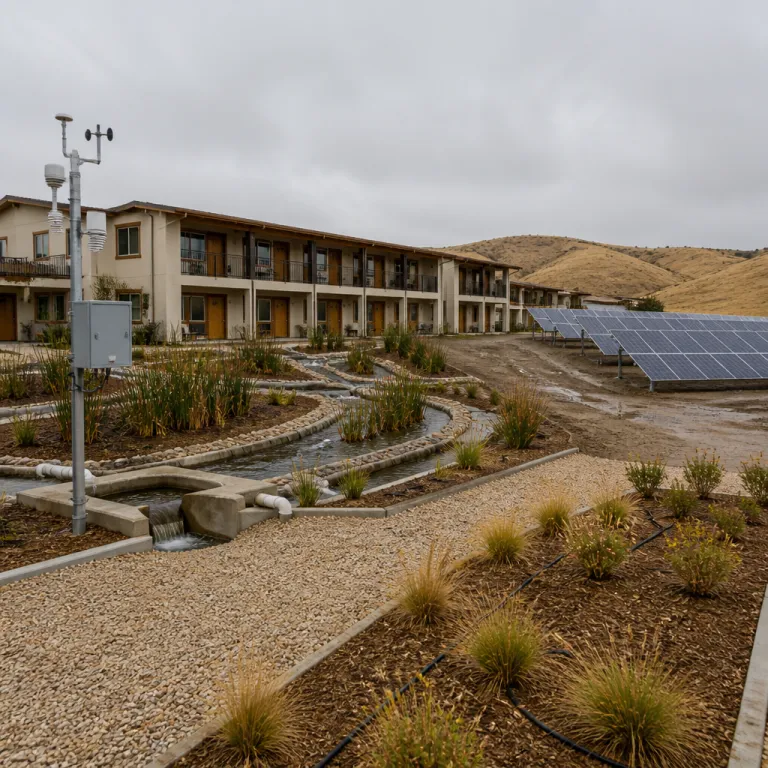
Behind the polished lobby of a truly sustainable luxury extended stay property lies a dense network of pipes, panels and control systems. Solar panels on the roof or nearby solar farms feed electricity into the building, while solar thermal collectors or flat plate panels preheat water that flows into insulated storage tanks before reaching guest rooms. Greywater systems capture lightly used water from showers and sinks, filter it and send it back into the system for irrigation or toilet flushing, reducing both water costs and environmental impact without guests needing to change their routines.
In the plant room, high efficiency boilers, heat pumps and other heating systems work in tandem with these renewable energy inputs. Smart controls adjust heat output based on occupancy data, weather forecasts and real time solar energy production, ensuring that hot water is available when guests need it without wasting energy when demand is low. Waste management is treated as another engineered system, with separate streams for recyclables, organics and residual waste, often supported by on site composting for kitchen scraps and clear signage for guests.
For guests, the most visible sign of this complexity might be a simple line on the website stating that the hotel’s annual solar energy production is equivalent to taking a certain number of cars off the road. Or it might be a note in the room explaining that your shower is heated by solar water systems and that your towel reuse genuinely reduces both water and energy use. When you read that “A system that recycles wastewater from sinks, showers, and laundry for reuse.” you are seeing the technical definition of greywater translated into a hospitality context where every litre and every kilowatt is counted and can be traced back to metered data.
Key figures that show sustainable extended stays in action
- Courtyard by Marriott Lancaster’s dedicated solar array produces around 1 239 000 kWh of solar energy annually, enough to cover the electricity needs of the entire hotel and significantly reduce its carbon footprint compared with a similar property on a conventional grid, according to data shared by High Companies and project partners.1
- Hotel Marcel in New Haven operates a 409 kW solar array as part of its microgrid, which allows the property to function as a net zero energy hotel during normal conditions and maintain critical hotel operations during grid disruptions, based on figures published by Generac and the project team.2
- Bardessono Hotel in Yountville holds a LEED Platinum certification, the highest level in the LEED rating system, which reflects high performance across energy efficiency, water conservation, materials and indoor environmental quality, as documented by the United States Green Building Council.4
- Case studies compiled by the United States Department of Energy Better Buildings Solution Center report substantial reductions in freshwater use where greywater recycling and other water reuse systems have been installed, illustrating how water saving infrastructure can cut both operating costs and environmental impact in hospitality and multifamily settings.3
FAQ about sustainable luxury hotel energy solar water systems
What is a greywater system in a hotel and why does it matter for extended stays ?
A greywater system in a hotel captures lightly used water from showers, bathroom sinks and laundry, treats it and reuses it for non potable purposes such as irrigation or toilet flushing. This reduces demand for fresh water, lowers wastewater volumes and cuts operating costs, which becomes especially impactful when guests stay longer and generate more cumulative water use. In extended stay properties, greywater recycling helps keep the environmental impact per guest night lower without asking guests to sacrifice comfort or convenience, and the savings can be quantified by comparing total potable water use with and without reuse.
How do solar farms and rooftop solar panels benefit luxury extended stay hotels ?
Solar farms and rooftop solar panels generate renewable electricity that can power guest rooms, public areas and back of house operations, reducing reliance on fossil fuel based grids. For luxury extended stay hotels, this means more predictable energy costs over time and a lower carbon footprint per occupied room, especially when combined with efficient heating systems and water heating loops. Guests benefit from the same level of comfort while knowing that a significant share of the energy powering their stay comes from solar power rather than conventional sources, and that the contribution can be tracked in kilowatt hours per guest night.
What should I look for in a sustainability section when booking an extended stay ?
When reviewing a hotel’s sustainability section, look for specific data and recognised certifications rather than vague eco friendly language. Concrete indicators include the percentage of energy from renewable sources, the presence of solar thermal or solar water heating systems, greywater recycling, waste diversion rates and any alignment with frameworks such as LEED, Green Key or GSTC recognised programmes. Extended stay guests should also check whether the property reports environmental impact per guest night, which shows that it is tracking performance in a way that reflects real occupancy patterns and longer stays, using clear formulas such as total annual emissions divided by total guest nights.
Do extended stays really reduce the environmental impact compared with short stays ?
Extended stays generally reduce environmental impact per night because they allow hotels to operate more efficiently. Fewer check in and checkout cycles mean less frequent linen changes, lower cleaning related water use and more stable occupancy, which helps heating systems, cooling systems and water heating loops run at optimal loads. When combined with infrastructure such as solar panels, greywater systems and advanced thermal systems, longer stays help spread the fixed environmental benefits of these investments over more guest nights, which is why many sustainability reports now present results on a per guest night basis.
How can I verify that a hotel’s green claims comply with the new EU rules ?
To verify that a hotel’s green claims comply with the EU Empowering Consumers for the Green Transition Directive, check whether generic terms such as eco friendly or green are backed by recognised certifications or detailed, independently verified data. Hotels operating in or marketing to the European Union should be able to provide documentation of their certifications, methodologies for calculating carbon footprint and evidence of third party audits. If a property cannot provide this information, it is safer to choose a hotel that publishes transparent data on energy, water, waste and emissions in line with emerging regulatory expectations, ideally including simple, auditable calculations per guest night.
Sources : High Companies; United States Department of Energy Better Buildings Solution Center; Generac; United States Green Building Council.
1 High Companies, project information on the Courtyard by Marriott Lancaster solar installation.
2 Generac and project partner materials describing the Hotel Marcel microgrid and solar capacity.
3 United States Department of Energy Better Buildings Solution Center, case studies on water reuse and efficiency in hospitality and multifamily properties.
4 United States Green Building Council, LEED project profile for Bardessono Hotel in Yountville.