How branded residences are reshaping luxury hotel expectations
Branded residences began as a niche product for high net worth buyers who wanted a familiar luxury hotel name on the deed. Today the story is less about logos and more about how frequent travellers are quietly rewriting the rules of luxury hospitality. With more than 690 branded residential schemes either built, operating or in the pipeline as of mid 2023, according to Savills’ Branded Residences Spotlight 2023, and Knight Frank forecasting the total to pass 700 projects by 2026 in its 2023 Global Branded Residences report, the sector now functions as a global focus group showing hotel brands exactly how their best guests want to live.
Analysts tracking the hotel market now treat every new branded residence project as both a real estate play and a hospitality laboratory. Savills’ 2023 research finds that branded residences achieve an average price premium of 30% over comparable non branded residential units, while Knight Frank’s 2023 report cites typical uplifts in the 25–35% range, which underlines how much value travellers attach to reliable service and a trusted brand. Behind the headlines about multi usd billion valuations and expanding market size sits a simple truth: guests want the ease of a hotel with the emotional security of a residence that feels like theirs.
Developers and luxury hotel brands understand that demand for extended stays is driving this growth as much as ownership. A branded residence that can flex between long stay hotel room type inventory and private residence use gives owners, guests and operators more market share resilience in uncertain cycles. One general manager in Dubai describes it as “running a hotel and a vertical neighbourhood in the same building.” For travellers, this evolution translates into more hotels offering apartment style layouts, better kitchens and laundry, and service rituals that assume occupancy will be measured in weeks rather than nights.
From Miami to the Middle East: where the market is moving fastest
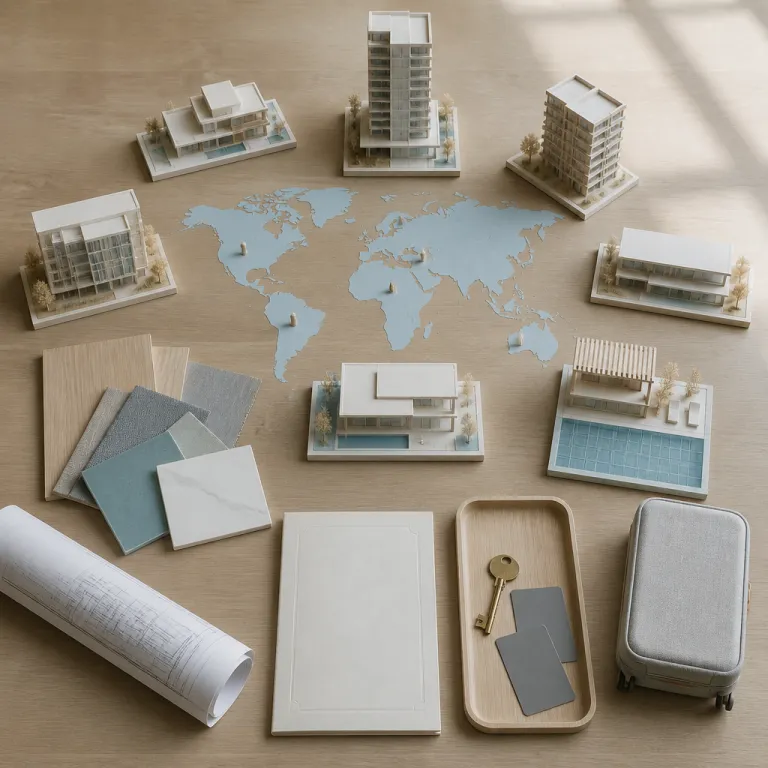
Look at a map of current branded residences and you see the future geography of luxury hotels. Miami has become the informal capital of branded residential living, with more than forty five completed or pipeline projects from over twenty two luxury hotel brands and lifestyle operators, according to Knight Frank’s 2023 Global Branded Residences report. That density of branded homes in one city shows how growth is clustering around destinations where business, leisure travel and real estate speculation intersect.
Across north america, the united states leads in both the number of residences and the sophistication of mixed use projects that blend hotel, residence and members club under one roof. Flagship examples include the Four Seasons Private Residences, Ritz Carlton Residences and St. Regis branded towers in cities such as Miami, New York and Los Angeles. In the middle east, especially Dubai and Riyadh, branded residential skyscrapers from operators like Address Hotels + Resorts and Six Senses are used as skyline statements, while in south america and east africa they often anchor broader regeneration projects that pull in new hotels and premium retail. Asia pacific is the quiet powerhouse: from Bangkok to Ho Chi Minh City, developers pair luxury hotels with branded residences to capture regional demand from travellers who split their time between several cities each year.
For extended stay guests, these regional patterns matter because they shape what room type options actually appear on booking platforms. In markets where branded residential development is strongest, travellers are more likely to see hotel listings that read like serviced residences, with floor plans, kitchen specifications and long stay service menus detailed as carefully as spa facilities. When browsing refined king suite style extended stays in these cities, the most residential style options effectively sit on the soft edge of the branded residential universe, even when marketed primarily as hotel accommodation.
Why extended stay travellers are driving the next wave of luxury hospitality
Spend more than ten nights in one place and priorities shift from lobby drama to laundry practicality. The rise of branded residential hospitality reflects this, because the most profitable guests for many hotels are no longer the one night conference crowd but the executive who quietly books a residence style suite for a month. For that traveller, the difference between a hotel and a residence is not the logo on the façade but whether the kitchen works, the desk is generous and the neighbourhood feels liveable.
Owners and operators read the same data about flexible work and blended travel, and they are designing branded residences to capture that blended lifestyle. A luxury hotel that adds a residential wing can offer high service standards to owners while also releasing some units into the hotel market as extended stay inventory when demand spikes. This dual use model supports hotel brands in maintaining rate integrity, because they can shift from nightly to monthly pricing without diluting the perceived premium of their core luxury hotels. It also allows revenue managers to treat long stay suites, serviced apartments and branded homes as one integrated pool of high value inventory, while still managing owner expectations around occupancy and wear.
For travellers, the practical question is when renting a branded residence makes more sense than booking a traditional suite. If the stay is shorter than two weeks, a conventional luxury hotel suite may be simpler and sometimes cheaper. Beyond that ten to fourteen night window, the ability to negotiate a rate that reflects residence style occupancy rather than transient hotel pricing can be significant, especially in usd terms once the usd thousand per night threshold is crossed. One frequent traveller to Riyadh describes the difference as “moving from a hotel bill to a temporary lease,” a shift that highlights how extended stay economics now sit at the centre of luxury hospitality strategy.
Wellness, services and the new definition of a luxury residence
Walk through a new generation branded residence lobby and the shift is immediately visible. The old formula of a concierge desk and a small gym has been replaced by medical grade wellness suites, longevity clinics and nutrition focused cafés that feel like extensions of high end spa facilities. This wellness pivot is central to the way branded residential hospitality is evolving, because it turns the residence into a daily service platform rather than a static real estate asset.
Developers now brief architects to design residences around circulation patterns that prioritise wellness, from daylight rich co working lounges to hydrotherapy pools that rival destination spas. For luxury hospitality brands, this is not just amenity inflation: it is a way to justify a higher usd per square metre valuation and to support a service fee structure that keeps staff levels high enough to deliver hotel quality attention. Operators such as Aman, Six Senses and One&Only have made this wellness centric approach a core part of their branded residence pitch. When a residence owner or long stay guest can move seamlessly from a medical consultation to a chef prepared dinner in their own kitchen, the line between hotel and home dissolves in a way that traditional hotels struggle to match.
For extended stay travellers, the implication is that the next long booking may quietly include access to services once reserved for private members clubs. As branded residences multiply, expect more hotels to advertise wellness led room type categories, where the residence layout, air quality systems and even mattress selection are part of a coherent health narrative. The broader market trend means that when premium or luxury options are filtered on a booking engine, travellers are increasingly filtering for a lifestyle infrastructure rather than just a larger room.
What 700 projects reveal about the future of hotel living
When analysts say there are more than 700 branded residences worldwide, they are really describing a new operating system for hotels. A 2023 expert summary from Savills frames the concept succinctly: “What are branded residences? Luxury homes affiliated with prestigious brands, offering hotel-like services.” and “Why are branded residences popular? They provide luxury living with hotel services and brand prestige.” and “How many branded residences exist worldwide? Over 700 projects as of 2026.” Those three sentences double as a roadmap for where luxury hotels are heading.
For hotel brands, every new branded residence project is a way to extend the brand into the daily lives of their most loyal guests, deepening hospitality relationships that used to be limited to a few nights per year. The global growth pattern shows that as these projects reach multi usd billion scale, they also stabilise earnings, because residence fees and real estate sales smooth out the volatility of seasonal hotel demand. JLL’s 2022 and 2023 hospitality outlooks highlight how extended stay and serviced apartment style products have outperformed many traditional hotel segments on occupancy and revenue per available room, reinforcing the appeal of residentially led models for investors.
There are, however, emerging risks alongside the opportunity. In some gateway cities, analysts warn about potential oversupply of branded residential towers, while owners can face complex resale conditions, higher service charges and regulatory scrutiny around short term rentals. For travellers, the most useful takeaway is to start reading hotel listings with an eye for residential DNA. When language appears about branded residence wings, serviced residences or branded residential towers, it usually signals properties shaped by the same forces driving this segment, even if the booking is only for ten nights, and it increases the chances of securing an apartment where the coffee shop downstairs starts recognising the order, not just a weekly rate that looks good on a spreadsheet.
FAQ
What exactly is a branded residence in the context of hotels ?
A branded residence is a residential unit that carries the name and standards of a recognised hotel or lifestyle brand while offering hotel like services such as housekeeping, concierge and in room dining. Some branded residences sit within or beside a luxury hotel, while others are standalone towers operated by hospitality companies. For travellers, they function as serviced apartments with a stronger emphasis on brand consistency, premium service and long stay comfort.
How does staying in a branded residence differ from a traditional luxury hotel stay ?
Staying in a branded residence usually means more space, a defined room type with a full kitchen and laundry, and interiors designed for longer occupancy. Service is closer to a private members club, with staff who quickly learn routines, while still providing the security and amenities of a hotel. For extended stays, this often feels less transient than a standard luxury hotel suite, especially when the residence is part of a mixed use real estate development with restaurants, wellness facilities and co working spaces built in.
Why are branded residences growing so quickly around the world ?
The sector is expanding because it aligns the interests of brands, developers and travellers. Brands gain new revenue streams and deeper loyalty, developers can often reach usd price points above local averages, and guests get hotel level service in a residence that feels like home. This alignment underpins the rapid expansion of branded residential hospitality across north america, the middle east, asia pacific, south america and east africa, as documented in 2022–2023 research from Savills, Knight Frank and JLL.
Should I book a branded residence or a hotel suite for a long business trip ?
If the stay is shorter than a week, a traditional luxury hotel suite may be simpler and sometimes cheaper. Once the ten to fourteen night mark is crossed, a branded residence or serviced residence style room type usually offers better value, more privacy and a layout that supports working, entertaining and relaxing. The best approach is to compare total usd costs, including any service charges, and then negotiate directly with the property for a monthly style rate that reflects extended stay occupancy.
Are branded residences only for property owners, or can regular travellers book them ?
Many branded residences are sold to individual owners, but a significant portion of the inventory is placed into rental pools managed by the hotel operator. That means regular travellers can often book these residences through the same channels they use for hotels, especially for extended stays. When searching, look for terms such as serviced residence, branded residence or residential suite within the hotel description, and check whether access to hotel facilities is fully included.