The mindset shift: packing for an extended stay as temporary living
Experienced long-stay travelers approach packing as a short-term move, not a vacation. They treat an extended stay packing list for a month-long hotel trip as a blueprint for temporary housing, where every object earns its place over time. This mindset changes what you pack, how you travel, and the way your hotel room feels after the first week.
Instead of asking what to bring for a trip, they ask what will make living in a hotel comfortable and efficient for thirty nights or more. That means fewer novelty items and more essentials that quietly work hard every day during the stay. Frequent long-term travelers often aim for one manageable checked suitcase and a carry-on, which shows how disciplined extended packing can be when you plan with intention.
One expert summary from experienced long-stay travelers captures it clearly: versatile clothing, essential electronics, and personal care items sit at the core of any smart packing list. Another practical insight from the same body of advice is equally blunt: use packing cubes, choose multi-purpose items, and pack light if you want your extended stay packing strategy for a month-long hotel trip to hold up in real life. These principles apply whether you are on a business trip, a creative sabbatical, or testing a city as future temporary housing.
Before you pack a single bag, clarify the purpose of your extended stay and the type of hotel stays you have booked. A month of remote work in a serviced hotel room demands different items than a long-term culinary immersion or language course. Write down the work, leisure, and social scenarios you expect, then map clothing items, shoes, and small travel packing accessories to each situation so you do not overpack random things month after month.
Luxury extended stay properties now use guest intelligence to anticipate these patterns, especially for repeat guests. When you book, ask the hotel what is already in the room, then tailor your extended stay packing list around the gaps rather than guessing blindly. For a deeper look at how real-time guest intelligence shapes long-term comfort, review how brands such as Minor Hotels describe long-stay reinvention through detailed guest data, room configuration, and service design in their portfolio reports and case studies.
The hotel reality check: what luxury extended stays provide (and what they do not)
Before you start packing for a month-long hotel trip, interrogate the property like a seasoned travel editor. Luxury extended stay hotels vary widely in what they provide in the room, especially around kitchen items, laundry access, and work-friendly layouts. The more precise your questions, the lighter your luggage and the more comfortable your stay.
Ask about the exact kitchen items in the hotel room, not just “kitchenette” as a vague promise. Some long-term suites include a real hob, microwave, cutting board, sharp knife, and basic cookware, while others offer only a mini fridge and a decorative kettle that barely helps keep you caffeinated. If you care about cooking, you may want to bring a compact cutting board, a favourite knife guard wrapped safely in your bag, and a small spice kit that transforms simple ingredients into proper meals.
Bathroom amenities also differ sharply between hotel stays, even at the premium end. Many extended stay brands provide body wash and a combined shampoo–conditioner, but the quality and fragrance can feel generic over time. If you are sensitive to scent or hair texture, pack your preferred body wash, separate shampoo, and a conditioner that works with the hair dryer in the room, because a month of compromise quickly feels longer than the trip itself.
Laundry is another fault line between expectation and reality in living hotel life. Some properties offer in-room washers, others rely on paid hotel services, and a few direct you to external laundromats that cost both time and money. Clarify the frequency, price, and turnaround so you can calibrate clothing items, pairs of shoes, and the overall packing list to match the real rhythm of your extended stay.
For wellness-focused travelers, the amenities question extends beyond soap and slippers. If your long-term stay is also a reset for sleep, fitness, or nutrition, look at wellness-oriented extended stay hotels where your health improves the longer you stay, then adjust what you bring accordingly. In such places, you might pack fewer workout items and more work tools, trusting the hotel to handle the gym, the pool, and the recovery spaces that help keep you balanced.
The capsule wardrobe: dressing well for four weeks with two bags
Clothes are where most travelers lose control of their extended stay packing tips for a month-long hotel trip. The instinct is to pack for every possible weather, mood, and social scenario, which leads to heavy luggage and a cluttered hotel room. Experienced long-stay travelers reverse the logic and build a capsule wardrobe that works hard across work, leisure, and unexpected invitations.
Start with a strict colour palette that allows all clothing items to mix and match elegantly. For a long-term stay, that might mean two pairs of tailored trousers, one dark jean, three shirts, two lightweight knits, and a blazer that can move from business trip meetings to dinner at the hotel restaurant. Add a compact set of workout clothes, sleepwear, and loungewear that you are not embarrassed to wear when housekeeping enters the room at the wrong time.
Shoes deserve ruthless editing because they dominate both space and weight in your bag. Many seasoned travelers limit themselves to three pairs of shoes: one smart pair for work, one comfortable pair for walking, and one versatile pair for exercise or poolside. Those three pairs of shoes, chosen carefully, will carry you through most things month after month, especially when the hotel offers laundry that keeps socks and clothes in rotation.
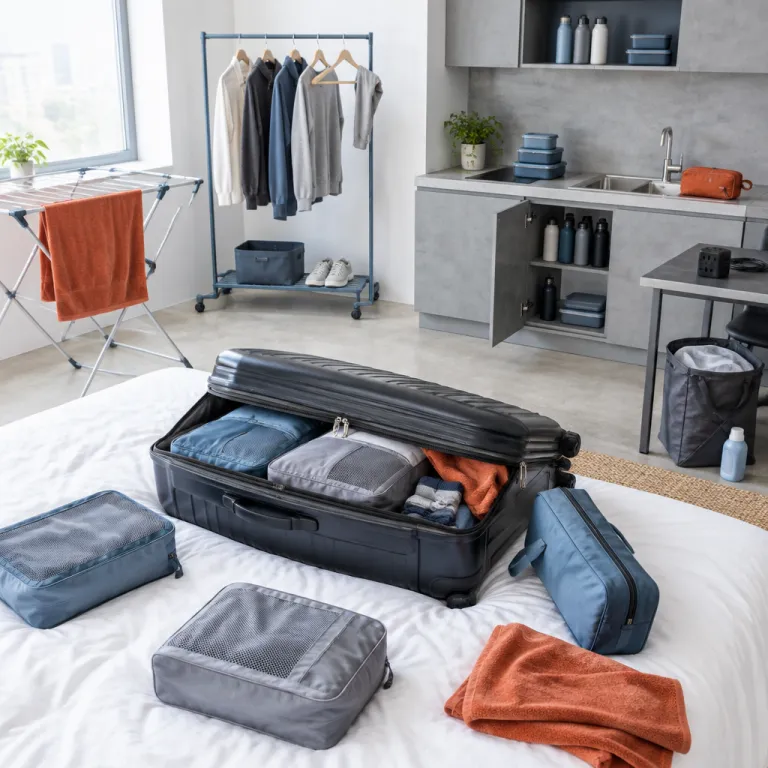
Packing cubes are the quiet heroes of travel packing for a month-long stay and the backbone of an organised wardrobe. Use one cube for work clothes, one for casual items, and one for gym or swim gear, then label them so you do not forget what lives where after a late flight. This system helps keep your hotel room feeling like a curated wardrobe rather than an exploded suitcase, and it makes repacking for side trips during the stay almost effortless.
If you are heading to a city where you might entertain or host colleagues, consider extended stay suites with separate living areas and bedrooms. Elegant two-bedroom suites in San Francisco for extended luxury stays, for example, allow you to keep luggage and clothing items out of sight while using the living room as a polished space for work or drinks. In such settings, a tight, high-quality wardrobe reads as intentional style rather than minimalist compromise.
The comfort kit: small items that transform a hotel room into a base
The difference between a generic hotel room and a personal base often comes down to a handful of small items. Experienced long-stay guests talk less about glamorous luggage and more about the quiet comforts they brought that made living hotel life feel human. These are the extended stay packing tips for a month-long hotel trip that rarely appear on standard checklists but matter every single day.
First, think about sleep and sound. A compact travel pillowcase from home, a soft eye mask, and noise-cancelling headphones can turn an unfamiliar room into a reliable sleep zone, especially when city noise or corridor traffic intrudes at the wrong time. Some travelers even pack a simple rubber doorstop, which helps keep the door firmly shut and adds a subtle sense of security during solo hotel stays.
Next, consider the micro kitchen items that upgrade the in-room experience. A small cutting board, a favourite mug, and a portable coffee setup can transform the first fifteen minutes of your morning, especially when you are working across time zones. These things month after month become rituals that anchor your stay, and they weigh far less than an extra pair of shoes or another stack of clothes you will never wear.
Do not forget the grooming details that hotels often overlook for long-term guests. Pack a reliable hair dryer if you are particular about styling, because many in-room models lack power or finesse for daily work-ready looks. Add a compact kit with your preferred body wash, shampoo, conditioner, and skincare essentials, decanted into travel bottles so your bag stays light while your routine remains consistent.
Finally, build a tiny work and wellness pouch that lives in your day bag. Include a slim extension cord, universal adaptor, a few cable ties, and a foldable laptop stand that helps keep your posture sane during long work sessions at the hotel desk. Add resistance bands or a lightweight yoga strap, and you have a mobile gym that turns any hotel room floor into a functional workout space without relying entirely on the property’s facilities.
The logistics: shipping ahead, unpacking smartly, and the art of leaving
Seasoned long-stay travelers treat logistics as part of the luxury, not an afterthought. When your extended stay packing tips for a month-long hotel trip include shipping a box ahead, you trade airport stress for a calmer arrival and a lighter bag. The key is to send only the bulky, predictable items that you know you will use throughout the stay.
Think of things month long that you will not want to carry through security but will appreciate in your temporary housing. That might include a favourite kitchen knife wrapped safely, extra work documents, a compact Bluetooth speaker, or a small stash of preferred snacks and supplements. Coordinate with the hotel in advance, confirm the exact shipping address and name format, and ask how long they will hold luggage or parcels before check-in.
Once you arrive, unpack fully within the first twenty-four hours of the stay. Hang clothes, line up shoes, and assign a drawer for electronics and small items so you do not forget where anything lives. This ritual helps keep your hotel room feeling like a considered space rather than a transient stop, and it makes daily travel packing for side trips or meetings far more efficient.
The return journey brings its own challenges, especially when souvenirs and last-minute purchases threaten to overwhelm your original packing list. Plan laundry timing so that everything is clean and dry the day before departure, then use packing cubes to compress clothing items and separate clean from worn pieces. If your luggage still feels overloaded, ship a small box home from the hotel, prioritising weighty but low-value items rather than cramming every corner of your bag.
Throughout the process, remember that the goal of an extended stay is to live well, not to manage stuff. When you pack like a resident rather than a tourist, your hotel stays become smoother, your work days more focused, and your evenings in the room genuinely relaxing. Over time, you will refine your own extended stay packing tips for a month-long hotel trip, editing ruthlessly until every item you brought earns its place in your life on the road.
FAQ
How should I start my packing list for a month long extended stay ?
Begin with the non-negotiable essentials: travel documents, medications, electronics, and the clothing items you wear every week at home. Then add work-specific pieces, two or three pairs of shoes, and a small comfort kit for sleep and grooming. Finally, cross-check with the hotel to remove any items already provided in the room so your luggage stays lean.
What are the most overlooked items for long term hotel stays ?
Guests often forget a compact cutting board, a sharp knife, and a proper coffee setup, which can transform simple kitchenettes into usable spaces. Many also skip a multi-outlet adaptor, a doorstop, and a small laundry kit, even though these items help keep the hotel room organised over time. A personalised body wash and shampoo–conditioner set also matters more than expected during a long stay.
How many bags and pairs of shoes are realistic for a month long trip ?
Most experienced long-stay travelers manage with one checked bag and one carry-on, using packing cubes to organise clothing items and work gear. Three pairs of shoes usually cover work, walking, and exercise without overloading your luggage. If you need more specialised footwear, consider shipping an extra pair to the hotel instead of carrying everything through the airport.
How can I keep a hotel room feeling organised during an extended stay ?
Unpack completely on day one, assigning specific drawers and shelves for categories like work, leisure, and toiletries. Use packing cubes as in-room organisers, not just for travel packing, so you can move items quickly between the wardrobe and your bag. A simple nightly reset, where you clear surfaces and prepare clothes for the next day, helps keep the space calm.
Is it worth shipping a box to the hotel before arrival ?
For long-term stays, shipping can be worthwhile if it replaces a second heavy bag and simplifies airport transfers. Send only predictable, non-fragile items such as extra clothing, kitchen tools, or work materials, and confirm the hotel’s policy on receiving and storing parcels. Always label the box clearly with your name and arrival date so the front desk can match it to your reservation without delays.
References
Travel + Leisure: long-term travel packing features and luggage guidance based on reader surveys and expert interviews. Condé Nast Traveler: extended stay hotel reviews and practical packing strategies drawn from on-the-ground reporting. International Air Transport Association (IATA): baggage rules and cabin luggage guidelines published in official passenger information and airline policy summaries.